This is a busy week for me. The hubby is traveling, the marking period marches along, Spirit Week at the high school requires a fair amount of ingenuity and elbow grease, and I have until the 30th to upload part one of my current project for a peer critique in early June. (I'm not sure I actually took a breath while typing that sentence.)
Mix in a demanding toddler, a pre-teen with a pre-attitude, a dedicated attempt to lose weight and I'm pretty sure it's the recipe for to the bone exhaustion. I've been ending my days in a Sarah puddle. Not to mention the blogging, the tweeting, the writing, the editing, and the other things I should be doing each and every day, right?
Wrong. Absolutely wrong. And I'm embarrassed to admit that my daughter Sophia figured this out well before I did.
"Mommy, stop." Her voice was quiet at first, and I was too busy multitasking to acknowledge her. "Mommy." Sadly still ignoring the voice as parents often do when trying to be productive. "Mommy stoooooooooooop," she hollered. Her face turned red and her tiny teeth chattered. "It's raining. It's raining. It's raining."
I need to listen to Sophia more often. I put everything down, I leaned over the back of the sofa in our living room and gazed out the window with her at the rain. I stopped thinking about anything that wasn't framed in the window. Blooming trees. Thousands of drops. The rhythm against the house. I haven't felt that good in days. Possibly weeks. And I didn't want to stop.
We live in a society hell bent on production, and being a writer offers added pressure. We are not Hemingway on a boat or in a fist fight living life. We are techno folks behind a screen developing images, typing words at lightning speed faster than our brains can think, reading blogs telling us to do better. Be better. We're liking statuses on Facebook, liking our own statuses - something I don't do but it drives me batty when I see it, and herding people into our virtual corral. And this just isn't, in my humble opinion, what writing is all about.
Creativity loves silence. Or if there is noise, authentic noise tends to hit the spot. Real voices with intonation, thunderous applause at a concert or ripping a piece of paper in half when the writing on it doesn't work. The glut of resources at our virtual fingertips can overwhelm and lose value. Minimally I worry that it's too easy to forget what's real. Watching life and living it are two distinctly different experiences. And I know that I feel the most depleted when I've been sitting for too long as a spectator. It's the easier choice to be one, but it's not the best.
I'm certainly not advocating sacrificing electronic communication or entertainment. Obviously you're reading my blog right now, and I know I'll be watching Survivor at 8 and texting with friends later on. Rather I'm suggesting that you make a simple pie chart of time spent actively living versus time spent as a spectator or voyeur. If the latter overwhelms, ask yourself a simple question. What is real?
After careful reflection, the best part of my day (before the rain episode with Sophia) occurred in study hall with two students energized by an idea for a play that they're writing. And while I did have my phone out playing Candy Crush from time to time, the best moments were the ones where I could almost see the ideas bouncing back and forth between the two of them. I think that's why I relish teaching. I witness inspiration like that every day. And the best days are when it comes from an unusual student I would have never guessed had the tornado brewing in them.
This evening I won't throw away all electronics and move into the yurt I so desperately want to buy for the backyard. But when I think about the writing craft and creativity, I am definitively detaching all of the baggage I have lately muddled it with. It's going to be me, a notepad, and a rainstorm. Or a quiet room, or one where my toddler might be braiding my hair. But at heart it's going to be just me and the writing. Ridiculous expectations and chaotic noise, I'm just not that into you anymore.
There are some days that you just can't write.
In an ideal world writers effortlessly sit each morning with a perfectly warm cup of coffee churning out works of brilliance.
And then there are the days that you just can't write.
According to the pediatrician, my daughter has contracted Flu B which is neither a lesser flu nor one exploring the alphabet. It just means that she can get the flu twice. (If there is a Flu C I am closing up shop.) She also figured out how to climb out of her crib last night. A sick, free range child is nothing to scoff at.
My son, a decade older than Sophia, finally succumbed to all the nasty symptoms hanging about our house. I'm sick too, and my sickness has manifested itself by making my lips swell to near epic proportion. Think Lisa Rinna, and if you don't know who she is, I'm proud of you. She's a dreadful actress. :-) My husband is traveling and I can't in good conscience ask others to help and expose themselves as both of my children are darling, highly contagious Ebola monkeys.
So you see, I just can't write. (Stick with me, I promise I'm getting somewhere with this including writing goodies!)
Yesterday I read aloud my novel-in-progress to Sophia, alternating between blotting her nose and making chicken scratch marks where problems ought to be fixed. I didn't fix them, mind you, but I made notations for later. For a day when I have more free time, like 2020. Don't worry, this isn't entirely a complaint blog. There are many fun aspects to being sequestered to a house with sick children and no other adult eyes. Pajama dance parties to Thrift Shop. Hourly readings of Goodnight Moon and watching a near teen smile because he still secretly loves it. Viewings of Labyrinth and David Bowie's package (do they even make spandex that tight anymore?), remembering Jim Henson for the visionary he was.
But I also humbly offer two suggestions on how to recharge your creative engines when they are near empty or broken down on the side of the road and you *think* you just can't write. In other words, how do you get to the point where you can write again?
Step one, read something you love and that you've read a million times before. My son Matthew and I read The Hobbit back and forth to one another, and we even mapped out how we might turn his room into a hobbit hole. He wants to use power tools, I want to use throw pillows. At any rate my brain didn't have to wrap itself around plot or characters. Instead I was just hanging onto the words, and each one spawned a tiny idea in my brain to be used at a later date.
Step two, head to the Internet with a strict promise to yourself that you will only look at positive and useful writing / artistic things. (Facebook does NOT count!) In the spirit of jump-starting your proverbial writing engines, I've assembled below a few favorite articles on writing and related topics. I rarely make it through to the end of them because I'm itching to get to work. Enjoy and save for a rainy or plague-ridden day.
"To Invigorate Literary Mind, Start Moving Literary Feet" - Joyce Carol Oates
"Becoming the Person You Were Meant to Be: Where to Start" - Anne Lamott
"Top 10 Tips to Get You Writing" - Everyone awesome, seriously Green, Chbosky and more
"Live Like You're Dying" - Chuck Palahniuk
"On Writing" - An Interview with Neil Gaiman
"How to Be a Writer" - M. Molly Backes (She's not as famous as the other folks, but I love her.)
"Inspiration? Head Down the Back Road, and Stop for the Yard Sales" - Annie Proulx
"You're such a jerk" - William B. Irvine (Not about writing but every time I read this the story ideas start multiplying like rabbits)
"Ten Commandments for the Happy Writer" - Nathan Bransford
"Ten Commandments of Writing for Children" - Upstart Crow Literary (You can never have enough commandments!)
"Seeing Nora Everywhere" - Lena Dunham (I can't read this and not cry a little)
The essential question for today: Why do I never, ever write at my writers desk? (Teachers out there, I probably lost you when I volunteered an essential question.)
For as long as I can remember, I've always carved out a writing space. The first was in my bedroom on a floral desk that looked like it climbed straight out of the 1950's. And I lined the desk with pencils, pencil grippers, a trapper keeper, and a bin for my typed pages. These were retro pages from a bona fide grey Royal typewriter with a burgundy lining. I stored my white-out cartridge on the desk, and a stack of unfinished books I intended to read sat precariously on the corner. (I'm not sure I ever finished all of them.) It was pretty darn professional for a teenager before the time of computers and flash drives.
But I never wrote there. I balanced my feet on the edge and painted my toenails. I lined up hermit crabs in obscenely painted shells and watched them race across the desktop. I thought about writing. But I never actually wrote there.
Flash forward to today. My window looks out on a pretend busy road, but there are more trees and flowers and pretty things to watch than cars. Three glass mermaids my mother bought me a million years ago live on this desk by the window. At seven I used to rest the trio on the lip of my bathtub and pretend I could be one of them except I hated dunking my head under the water. Sort of a roadblock for a mermaid wannabe. I keep pens and pencils, scissors and the ultra cool Doane paper and traced handprints of my children on the desk. I made a montage of beautiful notes my husband has given me over the years. I even have a copy of the book my mother made for me when I graduated college. She gathered all of my important stories and writings since I was five and bound them together. I often look back at my Scholastic Writing wins (a national gold key, I have to add) and the very first story I wrote about turning into a cat. Literally if great writing can't happen here, at this desk, well I just don't know where it can.
Yet when I sit down, my pen or laptop freeze. It's quiet, too quiet. I can hear the cogs in my brain grinding against one another. Even when I look out the window there's an eerie sensation of watching a film with no sound. I get little done. I wonder what Sophia and Matthew are doing. If our dog is eating crayons as he is apt to do. He has an odd predilection for shades of red. And after a few scribbles I realize that my best work is not done when I'm sequestered away from all of the bits that make up my life. I know that many writers recommend, insist, that you must have a special place reserved for your writing and writing alone. (See Laurie Halse Anderson's awesome video on the topic. Her writing cabin would make any writer drool.)
I've learned after years of writing, though, that I need the movement of life around me. I'm fairly convinced that this movement invigorates my writing. Ideas take form from the smallest things. My latest story starts with an anecdote my husband told me about a former teacher of his. Had I been sitting at my writing desk, it would have never happened.
Please do not take this to mean that Facebook and the evil internet are necessary requirements and should be blinking in the background. I have been trying little by little to cut back on those things, tv too. But I write better when my daughter is brushing my hair (violent toddler style!) or my son is telling me about middle school lunch table drama. Sure I can't devote my full attention to my writing but I also find I'm sifting through everything playing out in front of me for inspiration. And without inspiration, little gets done.
I'll certainly always keep a writing desk, but I know what works for me. Don't ever be afraid to explore nontraditional spots to write. In the end, you're in charge of what will inspire you to be the best writer you can. Happy writing!

I'm not sure how we got on the topic, but my husband mentioned a few days back that when he was in middle school he absolutely loved the author Piers Anthony. I'd never heard of him, and experiencing the insane urge that most teachers/writers/book lovers do to know every single author in the universe, I looked him up and even ordered the first book in one of his fantasy series. (Thank you Amazon for the crack that you call Prime, literally getting me anything I want in two days. Evil evil evil.) We also found a super cool This American Life, "Show Me The Way" where coincidentally two young men discussed adoring this author, one so much so that he actually ran away to go live with Anthony. (Anthony politely but appropriately refused.) I've only read a couple pages of A Spell for Chameleon, but the guy seems pretty cool.
This also spurred me to revisit all of the old books that drove my parents nuts when they saw me reading them. Both my mother and father are academics, and if it wasn't Little Women or The Stranger, they were appalled. I've read the good stuff, the beautiful stuff. With sentences so perfectly constructed that they would make you cry. But I thought it would be more fun this afternoon to reflect on the 'fluff' books that helped mold me into the writer that I am today. I still maintain (and always will) that there's a huge difference between recreational books and garbage. The books I'll be discussing have value. They don't promote poor ideals or stereotypes of women and teenagers that shouldn't exist. These books are just pure, unadulterated fun reads, and I enjoyed them as much as I enjoyed my first reading of Great Expectations.
(I still have every single one. See below.)
 We Hate Everything But Boys - Linda Lewis
Who isn't boy crazy in high school? This one is great because the girls form a club, a secret club, hiding the very obvious fact that they are boy crazy. Thankfully none of them lose their souls (sorry, only Twilight bash, I promise) or even their friends but instead do whatever it takes to find out who these objects of their affections like, even if the answers are crushing. My absolute favorite part? The protagonist gets the boy, things are resolved, but Lewis leaves her wondering what the heck happens when she heads to Junior High. Shockingly getting the guy was not the only happiness or looming question in her life. Good show, Lewis.
Cassie - Vivian Schurfranz
Back in the early 90's there was nothing like today's Young Adult and Middle Grade book markets. Little did I know when a friend gave me this book that it was not at all geared for my age group but was instead a Sunfire romance. This particular gem was about a spunky Caucasian girl captured by an Iroquois family, learning to survive and assimilate with a perky smile and flowing blond hair. This book (and many others in this serious that I completely devoured) all had brilliant pacing. I learned so much about moving a story along with action, even if from time to time the writing was so cheesy it begged for crackers.
The Secret Circle - L. J. Smith
Never judge this series based on the short-lived television show of 2012. By the author of the Vampire Diaries series, this town of witches is so, well, cool. I am embarrassed to admit that this is also about the time I started buying into crystals. Yes I very briefly thought there might be something to all that healing jazz. I also became obsessed with Toad the Wet Sprocket's "Walk on the Ocean" and believed that these three things were somehow cosmically related. I also loved the town that Smith created and started considering how a landscape might shape the characters rather than be just a static aspect of a work.
Facing It - Julian F. Thompson
I love this guy. His books contain the quirkiest characters who all just exist in the warm spaces he creates. This is actually the quietest of all of his books. (The Grounding of Group Six is a better one to start with.) I specifically remember this one because I didn't read about many male protagonists, and Randy Duke captured my attention immediately. His dialogue was spot on. I even liked the way he dressed. And I started considering how I would develop genuine male protagonists in my own writing.
Freshman Dorm (Book One) - Linda A. Cooney
This was of course required reading before I headed off to Dickinson. I mean, I was sure everything in this book was absolutely representative of college life. Actually I think that's why I loved this awful, awful series so much. I knew college life couldn't be this insane ball of turmoil, so it was fun watching the trio of girls (in their blazers and leggings and Maybelline Kissing Koolers) take on freshman year. I honestly can't think of one good writing lesson to draw from these except perhaps read what you love, and if it's a series more power to you because you get to visit and revisit the spot that makes you happy.
There are dozens more. Feel free to add you own guilty reading pleasure as long as it is not Fifty Shades of Grey or Twilight. I suppose when it comes to the two of them, I am a book snob.
We Hate Everything But Boys - Linda Lewis
Who isn't boy crazy in high school? This one is great because the girls form a club, a secret club, hiding the very obvious fact that they are boy crazy. Thankfully none of them lose their souls (sorry, only Twilight bash, I promise) or even their friends but instead do whatever it takes to find out who these objects of their affections like, even if the answers are crushing. My absolute favorite part? The protagonist gets the boy, things are resolved, but Lewis leaves her wondering what the heck happens when she heads to Junior High. Shockingly getting the guy was not the only happiness or looming question in her life. Good show, Lewis.
Cassie - Vivian Schurfranz
Back in the early 90's there was nothing like today's Young Adult and Middle Grade book markets. Little did I know when a friend gave me this book that it was not at all geared for my age group but was instead a Sunfire romance. This particular gem was about a spunky Caucasian girl captured by an Iroquois family, learning to survive and assimilate with a perky smile and flowing blond hair. This book (and many others in this serious that I completely devoured) all had brilliant pacing. I learned so much about moving a story along with action, even if from time to time the writing was so cheesy it begged for crackers.
The Secret Circle - L. J. Smith
Never judge this series based on the short-lived television show of 2012. By the author of the Vampire Diaries series, this town of witches is so, well, cool. I am embarrassed to admit that this is also about the time I started buying into crystals. Yes I very briefly thought there might be something to all that healing jazz. I also became obsessed with Toad the Wet Sprocket's "Walk on the Ocean" and believed that these three things were somehow cosmically related. I also loved the town that Smith created and started considering how a landscape might shape the characters rather than be just a static aspect of a work.
Facing It - Julian F. Thompson
I love this guy. His books contain the quirkiest characters who all just exist in the warm spaces he creates. This is actually the quietest of all of his books. (The Grounding of Group Six is a better one to start with.) I specifically remember this one because I didn't read about many male protagonists, and Randy Duke captured my attention immediately. His dialogue was spot on. I even liked the way he dressed. And I started considering how I would develop genuine male protagonists in my own writing.
Freshman Dorm (Book One) - Linda A. Cooney
This was of course required reading before I headed off to Dickinson. I mean, I was sure everything in this book was absolutely representative of college life. Actually I think that's why I loved this awful, awful series so much. I knew college life couldn't be this insane ball of turmoil, so it was fun watching the trio of girls (in their blazers and leggings and Maybelline Kissing Koolers) take on freshman year. I honestly can't think of one good writing lesson to draw from these except perhaps read what you love, and if it's a series more power to you because you get to visit and revisit the spot that makes you happy.
There are dozens more. Feel free to add you own guilty reading pleasure as long as it is not Fifty Shades of Grey or Twilight. I suppose when it comes to the two of them, I am a book snob.
Welcome to the best writing books I discovered/rediscovered this year. Although I'd love to pretend that I'm up on everything shiny and new, by no means are these all 2012 specimens. To be honest I have a lot of disdain for many instructional writing books out there that promise tricks of the trade and magical transformations of writing style when honestly reading other good authors can do just as much if not more. That being said, I enjoy trolling sites trying to find or rediscover the good ones. I also teach a Creative Writing course at my high school (yes - very lucky to do so) and I can rationalize reading these books not only as personal writing development but also research for school. And who doesn't love multitasking!
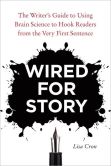
Wired for Story by Lisa Cron - I love, love, love this one, and it flies against every writing principle I hold dear. It speaks little of the beauty of writing and rather focuses on plot and the psychological impact your story can make on the human psyche. Essentially what does our brain crave when we read a book? Cron culls both film and literary examples, and I can't tell you how many lines I underlined of both her original thought and extensive psychological research that ties in perfectly with the writing process. There's also a neat section at the end of each chapter prompting you to ask very direct questions about your own work. I can't recommend this enough, especially since it's a short read. I managed to get through in about three days.
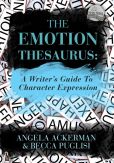
 The Emotion Thesaurus: A Writer's Guide to Character Expression by Angela Ackerman and Becca Puglisi - More of a reference than a read, every writer needs this book. No matter how skilled you are, you probably defer to a pout or a lip quiver for certain emotions, and this little guy provides pages of actions that help us show rather than tell in unusual ways. Quite easy to navigate and very straightforward.
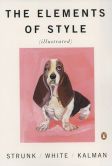
 The Elements of Style Illustrated by William Strunk and E. B. White - I hate grammar. There, I've said it, and I half expect the English teacher police to drag me out to the back yard and beat me (or at least take my teacher's card away). This is not to say I don't respect the heck out of grammar. I love syntax, I love playing with words, I love splitting infinitives with purpose. But I also hate the fact that not all of my mistakes are stylistic choices. Sometimes I flub, and those mistakes bug me later on or worse yet, sometimes I don't catch them at all and feel like a ninny when someone else points them out. I mean yeesh, I'm an English teacher. Don't I know them all? Nope. And this is the seminal text on not all, but certainly the most important rules and more importantly how they affect your writing. Another that can be used as a reference or read cover to cover. There is a non-illustrated version as well, but seriously, LOOK at that cute dog on the cover. Get this one.
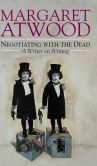
 Negotiating with the Dead: A Writer on Writing by Margaret Atwood - Margaret Atwood is brilliant. Period. Her fiction and poetry are sharp, her essays insightful. And I love how creepy these two appear on the cover. I bought this book at least five or ten years ago, and I finally got around to reading it. A BIG WARNING HERE! This is not a how-to write book. Rather this is a highly intellectual look at her process. That being said it feels like sitting down with her and peeking inside her brain, sort of a Being Margaret Atwood if you will. It's not an easy read, and there are parts that drag. But it's worth it. The book will challenge your brain and make you question your own process. It might be complimentary to read this with one of her fiction books as well (Oryx and Crake).
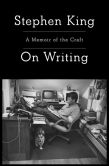
 On Writing by Stephen King - On the flip side, I'm not a Stephen King fan. I've read the classics and was never compelled, except maybe by It that just scared the living daylights out of me. I find King formulaic. But this book IS a how-to write masterpiece. And it's worth a dozen reads. Conservatively this past year was my sixth, maybe seventh journey through, spurred by one of my students reading it. And I am never disappointed. Half of the book is King's life replete with a detailed account of his love of reading. In my mind he is an ideal model of a writer, who clearly states over and over "If you don't have the time to read, you don't have the time or tools to write." Never has there been a truer statement about writing. I see too many writing students who insist on being writers when they either don't enjoy reading or refuse to make the time to read anything of quality. And quality doesn't equal classic. I learned plenty from the Sweet Valley High series when I was a teen. The second half of the book is King's advice on how to write, and while his novels aren't my cup of tea, the man's a very, very good writer. Pick this up and make it part of your yearly writer renewal. You'll be glad you did.
I tried to devise a snazzier title, but considering my resolutions are rather cut and dry this year, a utilitarian title suits. I had also planned to start by looking back at last year's resolutions and assessing those, but I think that's for another post. Tonight I'm peering straight ahead into the next 365 day ride.
1) I need to write every day for at least one hour...no cheating. I've always fought against this adage because in my own mind ten minutes of quality writing is worth an hour of garbage. That being said, I'm too easy on myself. I bank the good days of several hours of writing to justify lamer days where little gets done.
2) I need to view writing as a primary job. I'm a teacher...and I love it. All the time, even on the days when a student has me ready to jump out a window. But I love writing just as much, and I need to stop feeling guilty when I make time for it. It may not be bringing in the big bucks just yet (or ever), but it still deserves as much attention as my other jobs like teaching, parenting, etc.
3) I need to build more Lego sets. Seriously, it's important. Yesterday my family and I raided our embarrassingly huge stock of unfinished sets and created the following:
 The Mummy + Pirates of the Caribbean + LOTR + Bionicles + Avengers + The Hobbit + Star Wars. At least three or four times during the building process my brain raced to places in my current WIP and other stories where I could add new ideas or create subplots. The Lego adventure jumpstarted my creative process because I was making SOMETHING. Even if it did involve following another artist's plans, and yes those Lego geniuses who make these schematics are artists, I still felt creative and there are too many tasks in a routine day that try to suck that creativity right out of my toes. So I need to do more artsy and building stuff.
4) I need to talk to other writers. I have friends who write who I speak to, but we tend to get sidetracked with children and teaching and shoes. I need to do the writer speak thing more often. I am excited when I hear others speak of their processes, and I am happy to blab endlessly about how I write, too.
5) If I'm not sending my writing out SOMEWHERE, it's not suiting it's full purpose. Don't get me wrong, rejection is an integral part of being a writer, and it's a terrifying one. I know that there are some pieces I write which will never see the light of day. (A month after graduating Dickinson I wrote a short story called Cats and Guinness that I fully believed would be published in seconds and sadly still pouts in my binder of early writing with no magazines a' calling.) But it's the trying, the preparation, the process that can't really be a process without that last stretch. Otherwise writing becomes more of a selfish act, a pleasing myself and then stopping sort of act. And for me, anyway, that's not ok.
6) I WILL WRITE DOWN ALL OF MY GOOD IDEAS! If it wouldn't have been obnoxious, I would have made that one a million and a half font because there are dozens of fabulous sentences and characters and bits that are lost forever because I simply refused to slow down and capture them. I am not a surgeon up to my wrists in blood and a man's heart, I am not a pilot maneuvering an airplane above the clouds, and I am not a cowgirl engaged in a whiskey fueled gunfight. Therefore I can stop whatever I'm doing and tap ideas into my phone or use the ridiculously bad ass fountain pen my husband bought me for Christmas to write things down. No exceptions. No excuses.
7) Last but not least, I will be grateful. I get to be a writer. Somewhere in my brain is an insidious spark to create things, and I am blown away that everyone doesn't want to write all the time. Too often this past year I grumbled over minutia that wasn't that bad, or bad at all. And those moments all stole from my general happiness of being and my writing. Unacceptable, and I won't allow it in myself or those surrounding me this year.
Of course there are a million other resolutions that would look fabulous on paper (or screen). No more social networking. Oh FB and Twitter, you time goblins! Write every day between 4 a.m. and 6 a.m. because I'm just that committed. I will go to sleep reading Hemingway rather than swooning over The Vampire Diaries. But I'd rather these resolution be honest, be straightforward, the way I hope my writing ends up. Have a beautiful new year all you beautiful writers. Let's make it the absolute best we can, shall we?
The Mummy + Pirates of the Caribbean + LOTR + Bionicles + Avengers + The Hobbit + Star Wars. At least three or four times during the building process my brain raced to places in my current WIP and other stories where I could add new ideas or create subplots. The Lego adventure jumpstarted my creative process because I was making SOMETHING. Even if it did involve following another artist's plans, and yes those Lego geniuses who make these schematics are artists, I still felt creative and there are too many tasks in a routine day that try to suck that creativity right out of my toes. So I need to do more artsy and building stuff.
4) I need to talk to other writers. I have friends who write who I speak to, but we tend to get sidetracked with children and teaching and shoes. I need to do the writer speak thing more often. I am excited when I hear others speak of their processes, and I am happy to blab endlessly about how I write, too.
5) If I'm not sending my writing out SOMEWHERE, it's not suiting it's full purpose. Don't get me wrong, rejection is an integral part of being a writer, and it's a terrifying one. I know that there are some pieces I write which will never see the light of day. (A month after graduating Dickinson I wrote a short story called Cats and Guinness that I fully believed would be published in seconds and sadly still pouts in my binder of early writing with no magazines a' calling.) But it's the trying, the preparation, the process that can't really be a process without that last stretch. Otherwise writing becomes more of a selfish act, a pleasing myself and then stopping sort of act. And for me, anyway, that's not ok.
6) I WILL WRITE DOWN ALL OF MY GOOD IDEAS! If it wouldn't have been obnoxious, I would have made that one a million and a half font because there are dozens of fabulous sentences and characters and bits that are lost forever because I simply refused to slow down and capture them. I am not a surgeon up to my wrists in blood and a man's heart, I am not a pilot maneuvering an airplane above the clouds, and I am not a cowgirl engaged in a whiskey fueled gunfight. Therefore I can stop whatever I'm doing and tap ideas into my phone or use the ridiculously bad ass fountain pen my husband bought me for Christmas to write things down. No exceptions. No excuses.
7) Last but not least, I will be grateful. I get to be a writer. Somewhere in my brain is an insidious spark to create things, and I am blown away that everyone doesn't want to write all the time. Too often this past year I grumbled over minutia that wasn't that bad, or bad at all. And those moments all stole from my general happiness of being and my writing. Unacceptable, and I won't allow it in myself or those surrounding me this year.
Of course there are a million other resolutions that would look fabulous on paper (or screen). No more social networking. Oh FB and Twitter, you time goblins! Write every day between 4 a.m. and 6 a.m. because I'm just that committed. I will go to sleep reading Hemingway rather than swooning over The Vampire Diaries. But I'd rather these resolution be honest, be straightforward, the way I hope my writing ends up. Have a beautiful new year all you beautiful writers. Let's make it the absolute best we can, shall we?
I wanted to call this blog Why Stephenie Meyer Is Single-Handedly Destroying The Universe. Then I realized that might be a slight exaggeration, so I thought perhaps Neil Gaiman Should Be My Starbucks Pal. But that one sounded a shade stalker-like. I'm definitely filing both of those away for another time, but today I'll simply stick with I Want to Be Mary Gaitskill When I Grow Up.
Why Mary Gaitskill? Her writing is beautiful and genuine and slightly uncomfortable. I've read and reread her short story collections a dozen times or more. And when I write, I always hope that I can be that honest and raw in the words I put down on the page. I've blogged about it before, but honesty in writing means more to me than just about anything. And this leads me to my super obvious but utterly vital writer tip of the day.
Good writers surround themselves with other good writers. It's such a simple equation but one that I think people easily forget. I constantly run into folks who either read junk, or worse yet, don't read at all. Can you imagine that? An author who doesn't like to read? Sure there are a million excuses for not reading. It's time-consuming. It's costly. It's a mental challenge that rarely yields the instant gratification of a quick game of Angry Birds. But any reader worth his or her literary salt will quickly explain that those excuses don't matter because they can't live without reading. They need to crawl into the brains of others like an addict needs his or her poison of choice. Life...and reality...are just not good enough for readers when they know that just a hop, skip, and a Barnes and Noble or Kindle away, there are other worlds waiting with arms stretched open. (I also quickly point out the films and television, in their own rights, do very similar things.) But I digress. You have to read to write. It's one of those very clear universal truths. And this is how you discover writing mentors for life.
I note here that you have to read good things or else the equation collapses (hence the nod to Meyer, queen of the sparkling junk). Good stories are chock full of exciting vocabulary, engaging plots, quirky characters, and reading those stories is like feeding your brain with spinach and sweet potato vitamin food. Now I say this fully acknowledging that there is a vintage stack of Sweet Valley High books hiding in my basement. (A personal favorite - Book 2, Secrets. Oh Jessica, you vixen.) In my youth I also read The Secret Circle Series and a few others that made my very academic parents' stomachs twist and shout. But in between those fluff series I read every word L.M. Montgomery ever wrote. And Sewell. And Tolkien. And eventually Angelou, Munro, Hoffman, Palahniuk, Austen, and a million others. And I would argue that I know when I'm reading something quality. Or as my husband will quip from time to time, game recognizes game.
As a writer finding those mentors, in my case the Neil Gaimans and Jennifer Egans of the world, to respect and emulate is crucial. It's as much a part of the writing process as practice or taking classes or anything else. Basically if we can't recognize good writing in others, how can we possibly hope to cultivate or identify it in ourselves? I remember being obsessed with Joyce Carol Oates immediately after college. I underlined every other word in her stories when I read them. I copied down her phrases of wisdom and even tried on a few pairs of glasses like hers to channel the inspiration. And there are faint threads of her style still present in my own writing today. Little moments where making her my idol affected my process profoundly.
It's the one piece of writing advice I give without reservation. Find the writers you love, and hate, because they write so beautifully you want to die with envy, but it's a stunning envy. A fruitful one. Study those authors. Visit their homes if you can. Wear a scarf of their favorite color on a day you lack inspiration. Understand their style. Read their works aloud. And one morning, you'll wake up and realize that they've made a deep impression upon you. And that you've established a relationship with them that will last a lifetime and beyond.
Mary Gaitskill, if you're reading this, seriously give me a call. We have a lot to chat about.
.JPG)
